The Big Story
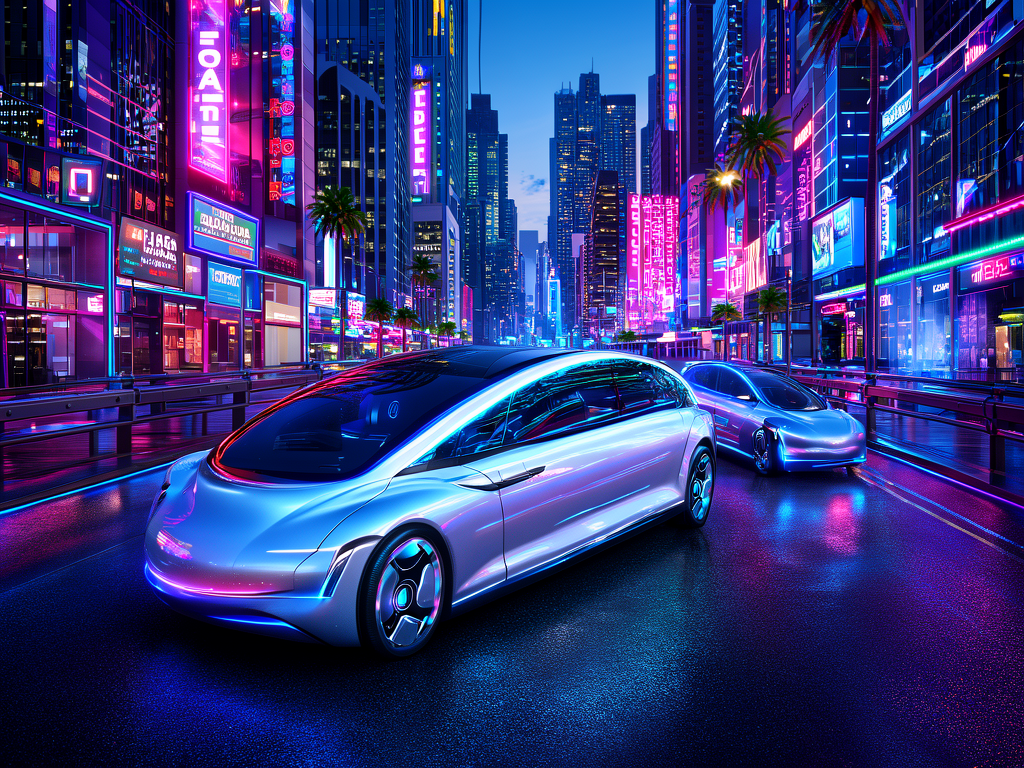
The Big Story: Tesla Brings its Robotaxi Service to Dallas and Houston
In a significant move that highlights the company's efforts to expand its autonomous ride-hailing services, Tesla has announced that it is bringing its robotaxi service to Dallas and Houston. This marks a major milestone for the company, as it now offers robotaxi service in three cities, all of them located in Texas.
The news comes after Tesla launched its robotaxi service in Austin last year and started offering rides without safety drivers in January 2026. The move is seen as a significant step forward for the company's autonomous driving technology, which has been under development for several years.
The robotaxi service uses Tesla's Autopilot system to enable self-driving vehicles to operate safely and efficiently. According to a report from TechCrunch, the service is designed to provide riders with a seamless and convenient experience, while also reducing the need for human drivers.
The expansion of Tesla's robotaxi service in Texas comes as no surprise, given the state's strong support for autonomous vehicle technology. In fact, Texas has become a hub for the development and testing of self-driving cars, with companies like Waymo and Cruise operating there.
The impact of this move is significant, as it signals Tesla's commitment to expanding its autonomous ride-hailing services across the United States. With its robotaxi service now available in three cities, including Dallas and Houston, the company is poised to continue pushing the boundaries of what is possible with autonomous driving technology.
What Shipped
NVIDIA has released Ising, the first open quantum AI model family for hybrid quantum-classical systems, marking a significant step forward in the development of scalable quantum computing solutions.
The Ising model is designed to enable efficient processing of complex optimization problems on both classical and quantum hardware, making it an essential tool for researchers working on quantum computing applications.
The release of Ising demonstrates NVIDIA's commitment to advancing the field of quantum computing and its potential applications in fields such as AI, machine learning, and scientific research.
Anthropic has released Claude Opus 4.7, a major upgrade to its agentic coding, high-resolution vision, and long-horizon autonomous tasks capabilities.
Claude Opus is a deep learning model designed for generative AI applications, enabling users to create more realistic and diverse text-based content.
The update includes improvements in areas such as agent coding, high-resolution vision, and long-horizon autonomous tasks, making it an essential tool for developers working on AI-powered projects.
Learn more about Claude Opus 4.7
From the Labs
NVIDIA has released Ising, the first open quantum AI model family for hybrid quantum-classical systems, marking a significant step forward in the development of scalable quantum computing solutions.
The Ising model is designed to enable efficient processing of complex optimization problems on both classical and quantum hardware, making it an essential tool for researchers working on quantum computing applications.
Anthropic has released Claude Opus 4.7, a major upgrade to its agentic coding, high-resolution vision, and long-horizon autonomous tasks capabilities.
Claude Opus is a deep learning model designed for generative AI applications, enabling users to create more realistic and diverse text-based content.
Learn more about Claude Opus 4.7
Other Notable News
AI chip startup Cerebras files for IPO, marking a significant milestone in the company's growth trajectory.
The announcement comes on the heels of several notable deals, including an agreement with Amazon Web Services to use Cerebras chips in Amazon data centers, as well as a reported deal with OpenAI worth more than $10 billion.
The App Store is booming again, and AI may be why. New data from Appfigures shows a swell of new app launches in 2026, suggesting AI tools could be fueling a mobile software boom.
My first impressions on ROCm and Strix Halo are overwhelmingly positive. The technology has the potential to revolutionize the way we approach GPU computing.
Binary GCD is an innovative algorithm that uses bitwise operations to calculate the greatest common divisor of two numbers. Its applications in cryptography and coding theory are vast.
The Take
The AI revolution continues to accelerate, with this week's announcements from Tesla, Cerebras, and NVIDIA bringing us one step closer to a future where artificial intelligence is deeply integrated into our daily lives.
Tesla's expansion of its robotaxi service to Dallas and Houston marks a significant milestone in the development of autonomous transportation. As the company moves away from requiring safety drivers for its rides, we're seeing the emergence of a new paradigm for urban mobility – one that's safer, more efficient, and environmentally friendly.
Cerebras' decision to file for an initial public offering (IPO) is a testament to the growing appetite among investors for AI-focused startups. With partnerships already in place with Amazon Web Services and OpenAI, Cerebras is poised to capitalize on the booming demand for AI-powered data centers and edge computing infrastructure.
NVIDIA's release of Ising, its open quantum AI model family, marks a major breakthrough in the quest for scalable quantum computing. By providing a standardized framework for hybrid quantum-classical systems, NVIDIA is opening up new possibilities for developers to build more sophisticated AI applications that can tap into the unique strengths of quantum computing.
The resurgence of the App Store, fueled by AI-powered tools and services, is another indication of the profound impact AI is having on the software development ecosystem. As we continue to see innovative applications of AI in areas like mobile app creation and deployment, it's clear that this technology is only going to become more integral to our lives.
As we look ahead to the future, it's exciting to think about the countless possibilities that will emerge from the intersection of AI, robotics, quantum computing, and software development. One thing is certain – the pace of innovation is unlikely to slow down anytime soon, and we can expect many more breakthroughs in the years to come.