The Big Story
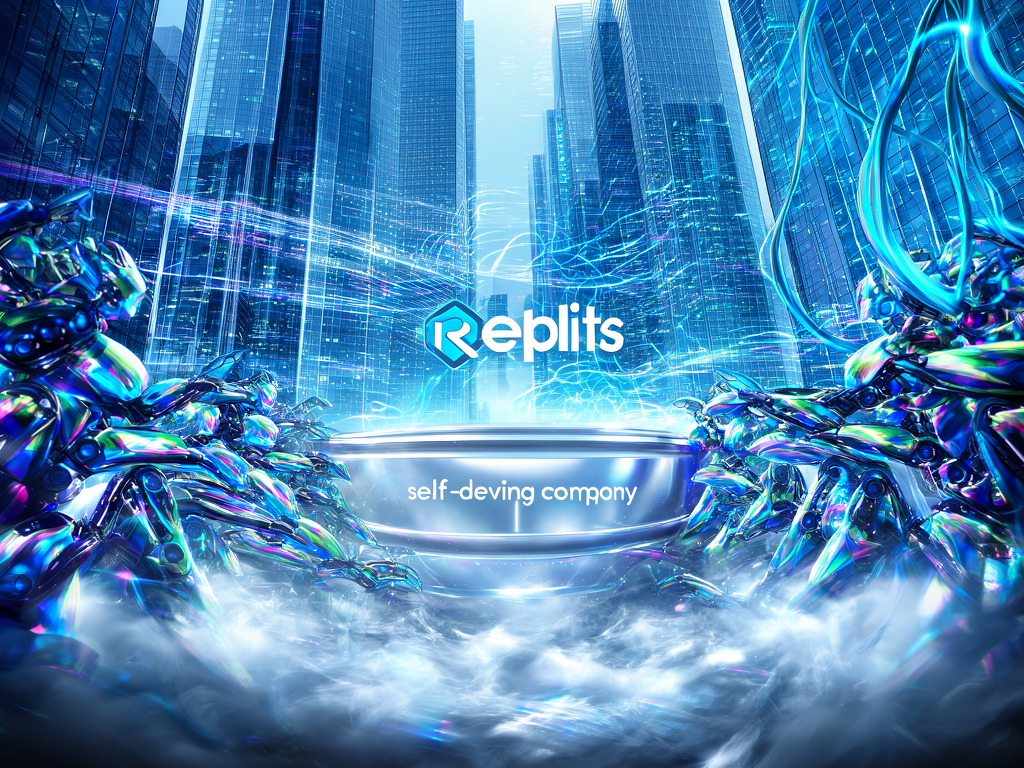
Replit's CEO says the future of work is the "self-driving company"! In a recent interview, Replit CEO Amjad Masad envisions a future where AI agents handle day-to-day tasks and people focus on higher-level decisions. This concept, which he calls the "self-driving company," has significant implications for the world of work as we know it.
According to Masad, this new approach will enable companies to automate routine tasks, freeing up human resources to focus on strategic planning and decision-making. He believes that AI-powered agents can take care of mundane tasks such as data entry, customer service, and even creative tasks like writing and design. This would allow employees to shift their attention to more high-level work that requires creativity, empathy, and critical thinking.
Masad's vision is not without precedent. Companies like Zappos and Southwest Airlines have already implemented AI-powered chatbots to handle customer inquiries and booking requests. Similarly, companies like IBM and Accenture are using AI-powered agents to automate tasks such as data analysis and report generation.
While the idea of a "self-driving company" may seem like science fiction, it's an idea that's gaining traction among business leaders and entrepreneurs. As AI technology continues to advance, we can expect to see more companies embracing this concept and redefining the role of human employees in the process.
What Shipped
How Itaú is building generative AI for its entire customer base
Itaú has been applying its AI First strategy to customers and employees, using a conversational interface and the IARA governance platform. This effort aims to provide personalized experiences for both individuals and businesses. Read More
StepFun Releases Step 5 Preview Open Weights: 600B MoE, 27B Active, 1M Context
StepFun has released the Step 5 Preview as open weights. The FP8 and BF16 checkpoints are live on Hugging Face and ModelScope. This sparse Mixture-of-Experts model is built for long-horizon tasks and has significant implications for natural language processing. Read More
Perplexity Open-Sources SPACE, a Firecracker MicroVM Sandbox for AI Agents
Perplexity has open-sourced the platform behind every task in Perplexity Computer. The Perplexity SPACE sandbox gives each agent its own Firecracker microVM, credentials, and output buffers, ensuring complete isolation between tasks. Read More
Elorian’s first AI model wants to reason with images, not just about them
According to Elorian's evaluations, Glimpse outperforms even GPT-6 Astra on scientific chart reasoning and short-form video captioning, with competitive results on other visual reasoning tasks. This open-weight model for agentic coding has significant implications for computer vision. Read More
Veritas expands its anti-counterfeit chip to jewelry, trophies, and fragrance bottles
Counterfeiters are getting better at replicating brands' marks and passing off dupes as genuine items. Veritas wants to tackle the problem with its own chip that verifies luxury goods, ensuring authenticity for consumers. Read More
Introducing Reflection Beam: an open-weight model for agentic coding on AWS
Reflection AI's Beam is an open-weight model for agentic coding and long-horizon tasks. This post shows how to deploy Beam on AWS, starting with an Amazon SageMaker JumpStart real-time endpoint or using Amazon SageMaker Autopilot. Read More
From the Labs
Grounding AI agents in biological reality: Building blocks for autonomous wet labs
General Science has a new breakthrough: Grounding AI agents in biological reality! This innovative approach aims to build blocks for autonomous wet labs, revolutionizing the way we work with AI. Read More
Introducing Reflection Beam: an open-weight model for agentic coding on AWS
Reflection AI's Beam is an open-weight model for agentic coding and long-horizon tasks. This post shows how to deploy Beam on AWS, starting with an Amazon SageMaker JumpStart real-time endpoint or using Amazon SageMaker Autopilot. Read More
Building trust in AI agents: A production-ready evaluation framework with Amazon Bedrock AgentCore
Autonomous AI agents fail softly: latency stays flat while answer quality quietly erodes. This post shares a nine-stage evaluation framework, built on Amazon BedRock AgentCore, that catches silent quality degradation. Read More
Do You Still Own the Code Your AI Wrote? I Built CodeOwnership to Measure It
I rated my confidence 4 out of 5, then couldn’t find a planted bug in 8 minutes. Here is the tool, the run, and its limits. Read More
I Built a Claim-Checker for Writing With Codex. It Passed a Wrong Claim.
The tool found the right passage but missed the mismatch, and the audit shows where rule-based checks break down. Read More
Other Notable News
Agentic RAG vs. Naive RAG: When Your Retrieval System Should Think for Itself
From static retrieval pipelines to autonomous reasoning engines: a complete breakdown of how these two architectures work, where each falls short, and how to choose the right one for your use case. The Agentic RAG is more effective when dealing with complex data sets, while the Naive RAG excels in simple scenarios. Read More
Deploying Data Science Tools: Part 1
Getting your data science code running anywhere. This post covers the first part of deploying data science tools, including cloud-based solutions and containerization. Read More
The Take
The recent surge in AI-generated content has sparked debate about its potential impact on various industries and societal norms. This week, we saw Itaú, a major Brazilian bank, announce its plans to build generative AI for its entire customer base using ia.i's conversational interface and IARA governance platform. Meanwhile, Stanford University PhD student Samuel King demonstrated the capabilities of AI-designed viruses in a roundtable discussion.
As the world becomes increasingly dependent on AI-driven technologies, it is crucial that we address concerns about job displacement and inequality. The CEO of Replit, Amjad Masad, recently shared his vision for the future of work, where AI agents handle day-to-day tasks and humans focus on higher-level decisions.
The rise of autonomous AI agents also raises questions about accountability and trust. Amazon Bedrock AgentCore has developed a nine-stage evaluation framework to ensure that these agents fail softly, meaning their performance degrades gradually rather than suddenly.
In the realm of film production, actor Mark Wahlberg expressed his openness to using AI in filmmaking, emphasizing the importance of doing so "the right way." This sentiment is echoed by Elorian's first AI model, which aims to reason with images rather than just about them.
The increasing reliance on AI also raises concerns about intellectual property and ownership. A researcher built CodeOwnership to measure the amount of code written by AI models, acknowledging that the question "Do you still own the code your AI wrote?" is relevant in today's world.
As we move forward with these technological advancements, it is essential that we prioritize responsible development and deployment. This includes ensuring that AI agents are grounded in biological reality, as evidenced by Google's research on autonomous wet labs, and that they are evaluated using frameworks like Amazon Bedrock AgentCore's nine-stage evaluation framework.
Lastly, the proliferation of AI-designed viruses highlights the importance of responsible innovation in the life sciences. As we continue to push the boundaries of what is possible with AI, it is crucial that we do so with caution and consideration for the potential consequences.